


Carbon Steel vs Nonstick Cookware: A Comprehensive Comparison for 2026
Carbon Steel vs. Nonstick Cookware: Which Should You Buy?
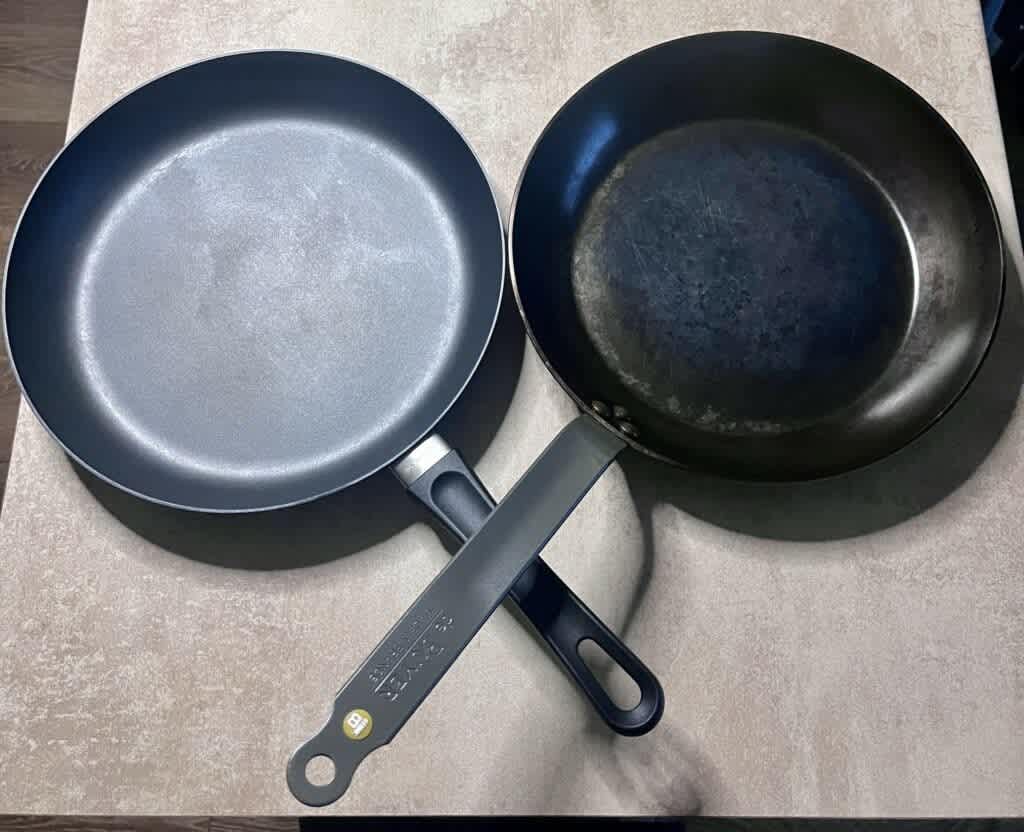
Carbon steel (left) and nonstick (right) — two very different pans built for very different cooks.
🛒 Shop These Pans in Our Store
All the cookware mentioned in this guide is available now. Choose the perfect pan for your kitchen:
- What carbon steel and nonstick pans are
- The biggest differences in heat, durability, and upkeep
- Which pan is better for eggs, steak, vegetables, and daily cooking
- Our top 2026 buying recommendations
What’s the Difference?
Carbon steel pans are made from roughly 99% iron and 1% carbon, which makes them behave like a lighter, faster-heating version of cast iron. They build a natural nonstick surface over time through seasoning — the gradual buildup of polymerized oil that fills the microscopic pores of the metal.
Nonstick cookware typically starts with an aluminum or stainless base and adds a synthetic coating such as PTFE (Teflon) or a ceramic-style surface. That factory-applied coating is what gives nonstick pans their effortless food release right from day one.
Quick Answer
Buy carbon steel if you want high-heat searing, long lifespan, oven versatility, and a pan that gets better with seasoning over time.
Buy nonstick if you want the easiest possible pan for eggs, pancakes, delicate fish, and fast cleanup with almost no learning curve.
Head-to-Head Comparison
| Category | Carbon Steel | Nonstick |
|---|---|---|
| Heat tolerance | Excellent for high heat and searing | Best at low to medium heat |
| Food release | Improves after seasoning | Excellent right away |
| Durability | Very long-lasting | Coating wears over time |
| Maintenance | Needs seasoning and drying | Very easy to clean |
| Utensils | Metal utensils generally okay | Silicone or wood only |
| Price range | $30 – $200+ | $20 – $200+ |
| Best use | Steak, stir-fry, browning, roasting | Eggs, omelets, crepes, delicate fish |
Why Home Cooks Choose Carbon Steel
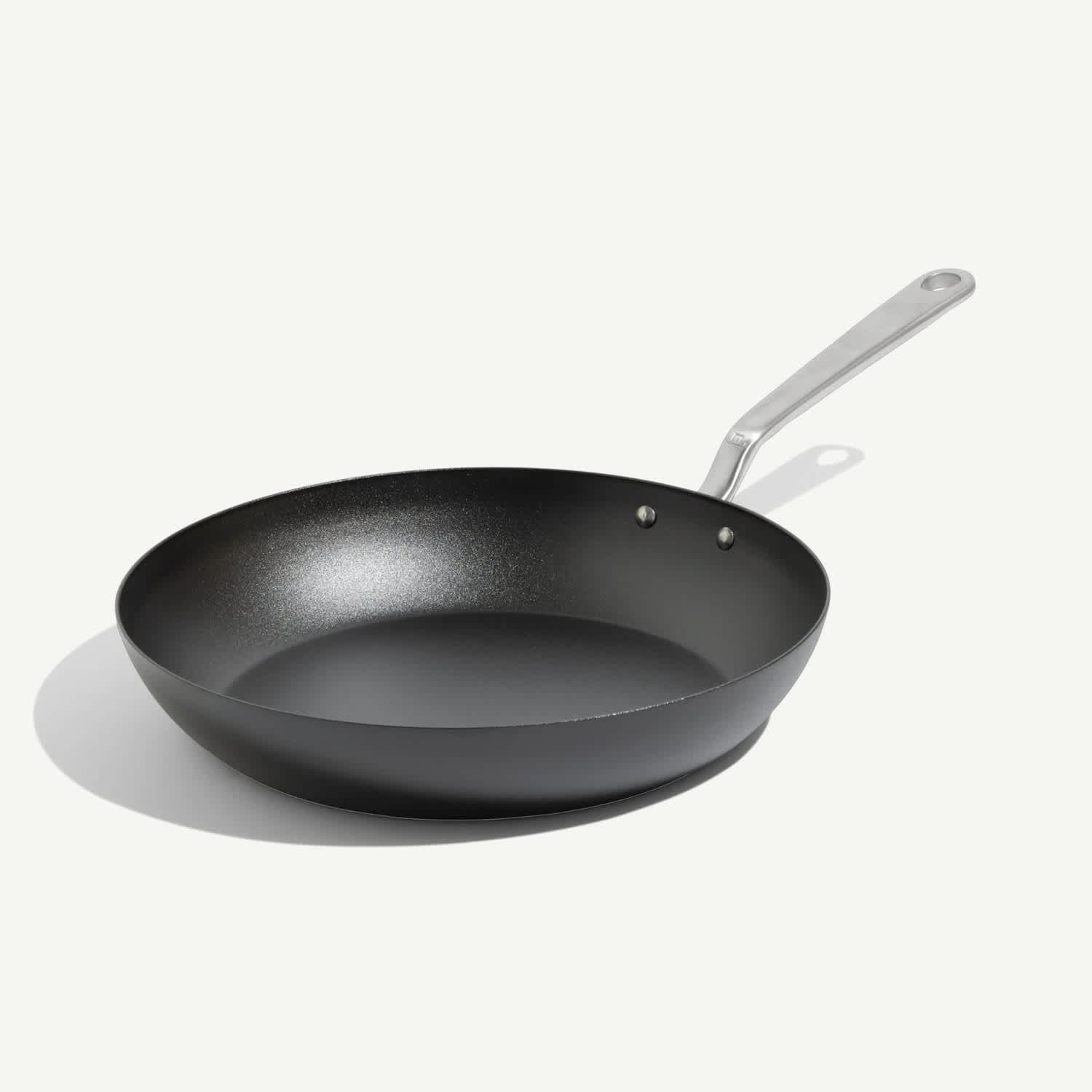
A well-seasoned carbon steel pan develops a naturally dark, slick surface that improves with every cook.
Carbon steel handles much higher temperatures than nonstick, making it ideal for searing proteins and achieving a deep brown crust. Unlike nonstick pans, it can go safely from stovetop to oven at temperatures exceeding 600°F in most cases.
Its surface also develops a natural stick-resistant patina with use, rather than depending on a factory coating that degrades over time. Many experienced home cooks and professional chefs prefer carbon steel for this reason — the pan actually gets better the more you cook with it.
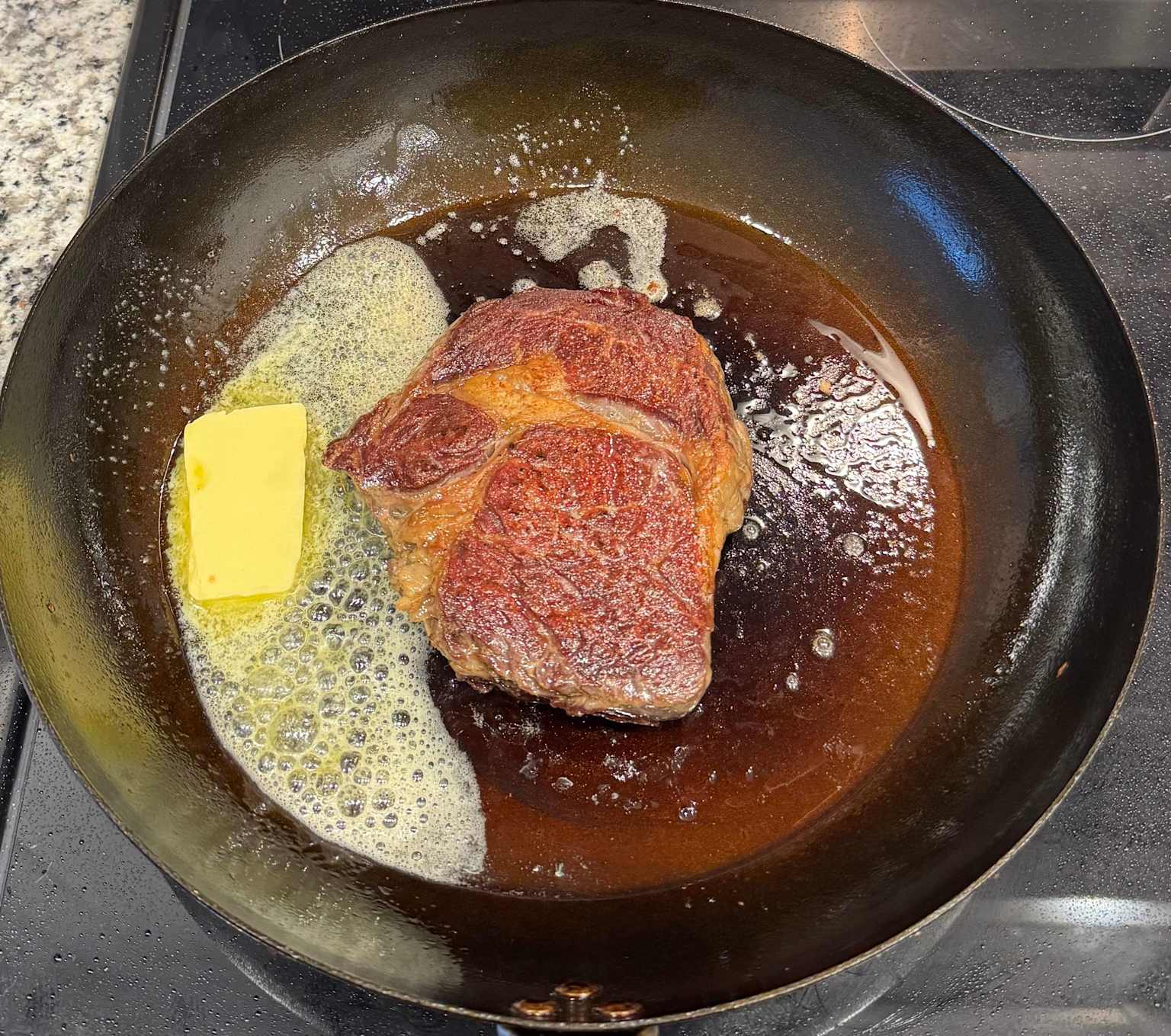
The high heat tolerance of carbon steel produces a deep, even sear that nonstick simply cannot match.
Carbon Steel Is Best For
Steak Stir-fry Roasted vegetables Oven finishing Long-term use✓ Pros
- Excellent heat tolerance for searing
- Becomes naturally slick with seasoning
- Extremely long lifespan
- Oven-safe at high temperatures
- Tolerant of metal utensils
✗ Cons
- Needs seasoning and drying after washing
- Can rust if neglected
- Not beginner-friendly at first
- Eggs may stick until well seasoned
Why Home Cooks Still Love Nonstick
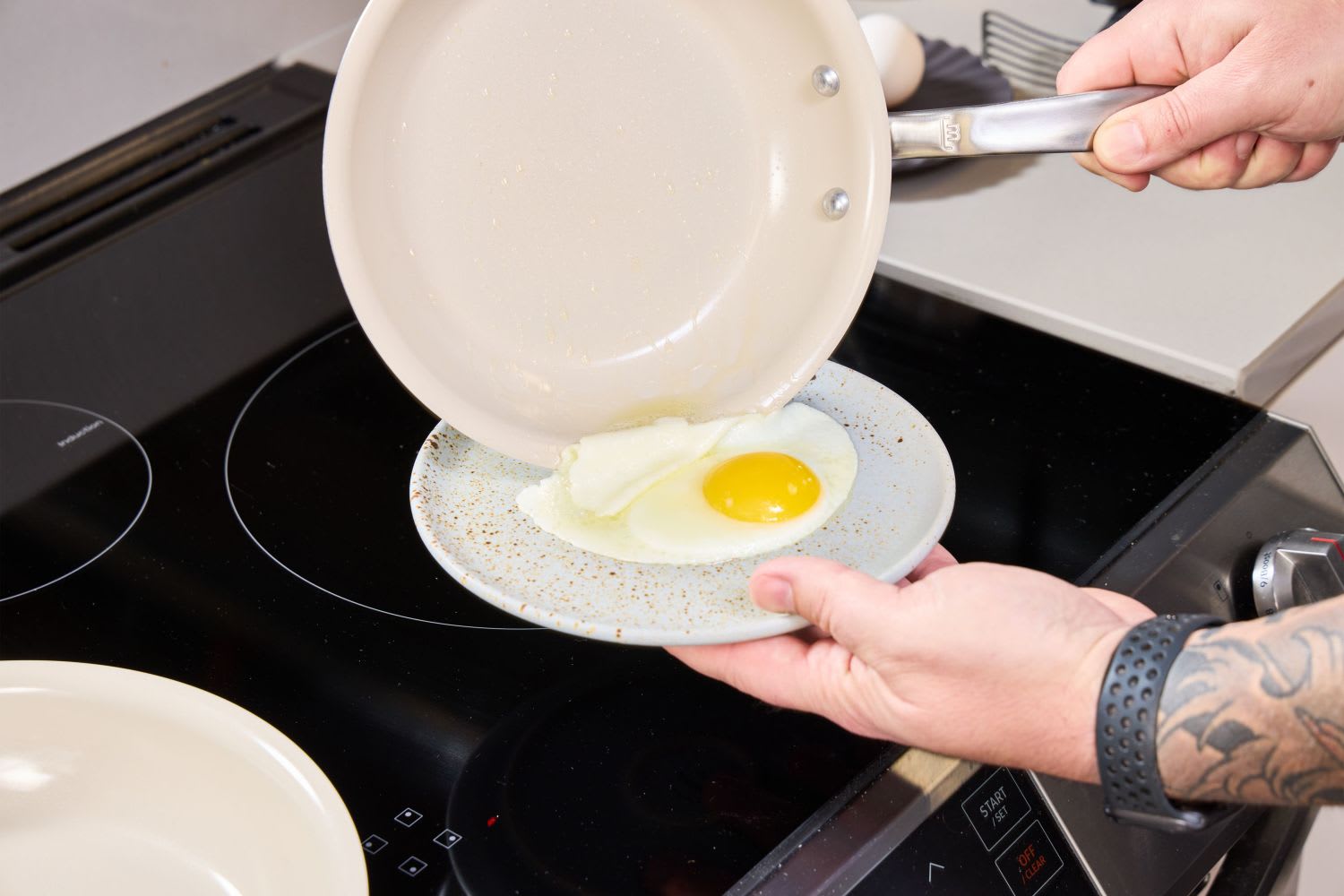
Nonstick pans make cooking eggs nearly effortless — a task carbon steel can struggle with before full seasoning.
Nonstick pans are lighter, more affordable, and easier to clean than most alternatives. For everyday tasks like scrambled eggs, omelets, or pancakes, nothing beats the convenience of a nonstick surface that requires almost no oil and cleans up in seconds.
Modern ceramic nonstick options made without PTFE have also improved significantly, giving buyers a coating-free alternative that is still easy to use and heat-safe at moderate temperatures.
Nonstick Is Best For
Eggs Pancakes Fish fillets Low-oil cooking Fast cleanup✓ Pros
- Excellent food release from day one
- Fast and easy cleanup
- Very low learning curve
- Lighter and more affordable
✗ Cons
- Coating degrades over time
- Not suitable for very high heat
- Scratches more easily
- Shorter lifespan than carbon steel
Which Pan Is Better for Common Foods?
| Food | Better Choice | Why |
|---|---|---|
| Eggs and omelets | Nonstick | Effortless release with minimal oil |
| Steak and burgers | Carbon steel | Higher heat and superior browning |
| Salmon and delicate fish | Nonstick | Less tearing, simpler cleanup |
| Stir-fry and vegetables | Carbon steel | Fast heat response, stronger sear |
| Pancakes and crepes | Nonstick | Even browning, easy flip |
| Weeknight reheating | Nonstick | Convenient and low-maintenance |
Durability and Safety
Carbon steel is widely considered the more durable long-term option because there is no synthetic cooking surface to wear away. The pan’s performance is tied to its seasoning, which can always be restored even if it gets stripped.
For buyers concerned about synthetic coatings, ceramic nonstick pans made without PTFE are available and have improved noticeably over the past few years. That said, carbon steel avoids these concerns entirely by relying on natural seasoning instead of any factory-applied surface.
Best Picks in 2026
🏅 Top Carbon Steel Picks
- Mauviel M’Steel Round Frying Pan — Lightweight, quick to heat, and excellent heat retention. A top-rated pick by multiple kitchen reviewers.
- Matfer Bourgeat Black Carbon Steel Frying Pan — Professional-grade French pan favored by chefs and home cooks alike for its build quality.
- OXO Carbon Steel Obsidian Series — Comes preseasoned and oven-safe to 660°F. One of the most accessible carbon steel options for beginners.
- de Buyer Mineral B Pro Fry Pan — Made in France with a beeswax coating for easy initial seasoning. A benchmark for carbon steel quality.
🏅 Top Nonstick Picks
- Tramontina Professional Fry Pan — Consistently recommended for even heating, solid food release, and strong value.
- Oxo Ceramic Professional Non-Stick — PTFE-free ceramic coating with excellent food release and even cooking performance.
- Le Creuset Toughened Nonstick PRO Fry Pan — Premium build with a reinforced nonstick surface that holds up longer than budget options.
- Blue Diamond Diamond-Infused Ceramic Frying Pan — PFAS-free and budget-friendly. A strong choice for light everyday cooking.
So, Which Should You Buy?
If you want one pan for serious cooking, high heat, and long-term value, carbon steel is the smarter investment.
If you want the easiest pan for breakfast, quick lunches, and stress-free cleanup, nonstick is the better everyday convenience tool.
For most American kitchens, the real answer is not either-or. The best setup is one carbon steel pan plus one small nonstick pan — giving you both searing power and easy egg performance. 🍳
FAQ
SEO title: Carbon Steel vs. Nonstick Cookware: Which Should You Buy? (2026)
Meta description: Trying to choose between carbon steel and nonstick cookware? This 2026 guide breaks down heat, durability, maintenance, safety, and the best use cases for each pan.
URL handle: carbon-steel-vs-nonstick-cookware